If you’ve ever stepped out for a quick errand and come back with a tan line or a fresh dark patch on your cheeks, you’re not alone. India’s intense sun, combined with pollution and humidity, makes pigmentation one of the most common skin concerns we see in clinic — across every age group and skin tone. The good news is that with a few consistent habits, most of it is preventable.
Understanding Sun Damage and Pigmentation
The sun’s UV rays don’t just cause tanning. Over time, they trigger excess melanin production, leading to dark spots, uneven tone, and conditions like melasma — those stubborn brownish patches that often appear on the cheeks, forehead, and upper lip.
Melasma is especially common in Indian women, and it tends to worsen with heat, hormonal changes, and repeated sun exposure. Many people mistake it for regular tanning and try home remedies, which usually don’t help and can sometimes make things worse.
Pollution and blue light from screens can also contribute to pigmentation, so protection isn’t just an outdoor concern anymore — even long work-from-home days near a bright window can add up over months.
Pigmentation isn’t just a cosmetic issue for most people — it can affect confidence and how comfortable you feel in your own skin. Understanding what’s actually causing your dark spots is the first step to treating them effectively, rather than masking them temporarily.
Other common triggers include acne marks that linger after a breakout, sensitivity to certain skincare products, and post-inflammatory pigmentation from waxing, threading, or minor skin injuries. Genetics play a role too, so if pigmentation runs in your family, start protective habits earlier.
Building a Daily Sun Protection Routine
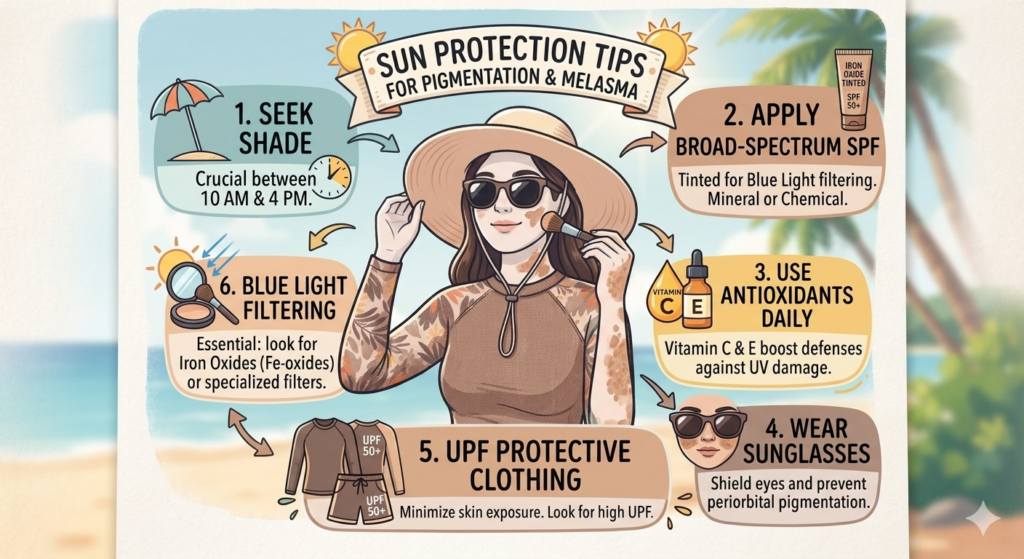
The single most effective step you can take is wearing sunscreen every single day, rain or shine, indoors or out. Look for a broad-spectrum SPF 30 or higher that protects against both UVA and UVB rays, and reapply every 3-4 hours if you’re outdoors for long stretches.
In India’s heat and humidity, a lightweight, non-greasy, water-resistant sunscreen tends to work best, especially for oily or acne-prone skin. Gel-based or matte-finish formulas are usually more comfortable for daily wear than thick, heavy creams that feel sticky within minutes of stepping outside.
Don’t stop at sunscreen alone. A wide-brimmed hat, UV-protective sunglasses, and seeking shade between 11 am and 4 pm — when the sun is strongest — go a long way in preventing new pigmentation. On days when you’re commuting or running errands, even a dupatta or scarf over exposed areas adds an extra layer of protection.
Choosing the Right Sunscreen and Skincare Routine
With so many sunscreens on the market, it’s easy to feel overwhelmed. Look for the words “broad-spectrum” and a PA rating (PA+++ or higher) alongside the SPF number — this tells you it protects against both UVA and UVB rays, which matters for preventing pigmentation, not just sunburn.
If you have oily or acne-prone skin, choose sunscreens labelled “non-comedogenic” so they don’t clog pores or trigger breakouts. Dry or sensitive skin generally does better with a hydrating, fragrance-free formula, and physical (mineral) sunscreens with zinc oxide can be gentler for reactive or post-treatment skin.
Pair your sunscreen with a simple routine: a gentle cleanser, a lightweight moisturiser, and, if recommended by your dermatologist, targeted actives like vitamin C or niacinamide, which can help brighten skin over time when used correctly and consistently. Introduce new products one at a time and give each a few weeks before judging results.
Reassess your routine with the seasons — monsoon humidity calls for a lighter sunscreen, winter dryness for a more hydrating one. If you’re using in-clinic treatments like peels or lasers, sunscreen becomes even more essential, since treated skin is more UV-sensitive.
Common Mistakes to Avoid
A frequent mistake is applying sunscreen only when heading outdoors and skipping it on days spent mostly indoors. UV rays pass through windows too, so daily application matters regardless of your plans.
Another common error is using an insufficient amount of sunscreen or not reapplying it. A little dab isn’t enough — most people need about a fingertip’s worth for the face alone, applied generously and evenly rather than rubbed in thinly.
Many people also assume that darker skin tones don’t need sunscreen because they “don’t burn easily.” In reality, melanin-rich skin is just as prone to pigmentation and uneven tone from sun exposure, so this myth often leads to years of unprotected sun damage.
It’s also common to try random pigmentation creams recommended by friends or found online, but not every dark spot has the same cause — the wrong treatment can worsen pigmentation or irritate sensitive skin. Genuine improvement usually takes 6 to 12 weeks, so stick with a routine instead of switching products every few days.
When to See a Dermatologist
- Dark patches that keep spreading or darkening despite regular sun protection
- Pigmentation that appears suddenly, changes shape, or is accompanied by itching or irritation
- No visible improvement after several weeks of a consistent, gentle skincare routine
Take the First Step Towards Clearer Skin
Sun protection and pigmentation care work best when they’re consistent and guided by the right advice for your skin type. If dark spots or melasma have been bothering you, our dermatologists can help you find a plan that actually works. Book a consultation today!
This article is for informational purposes only and does not constitute medical advice. Please consult a qualified dermatologist for diagnosis and treatment.