
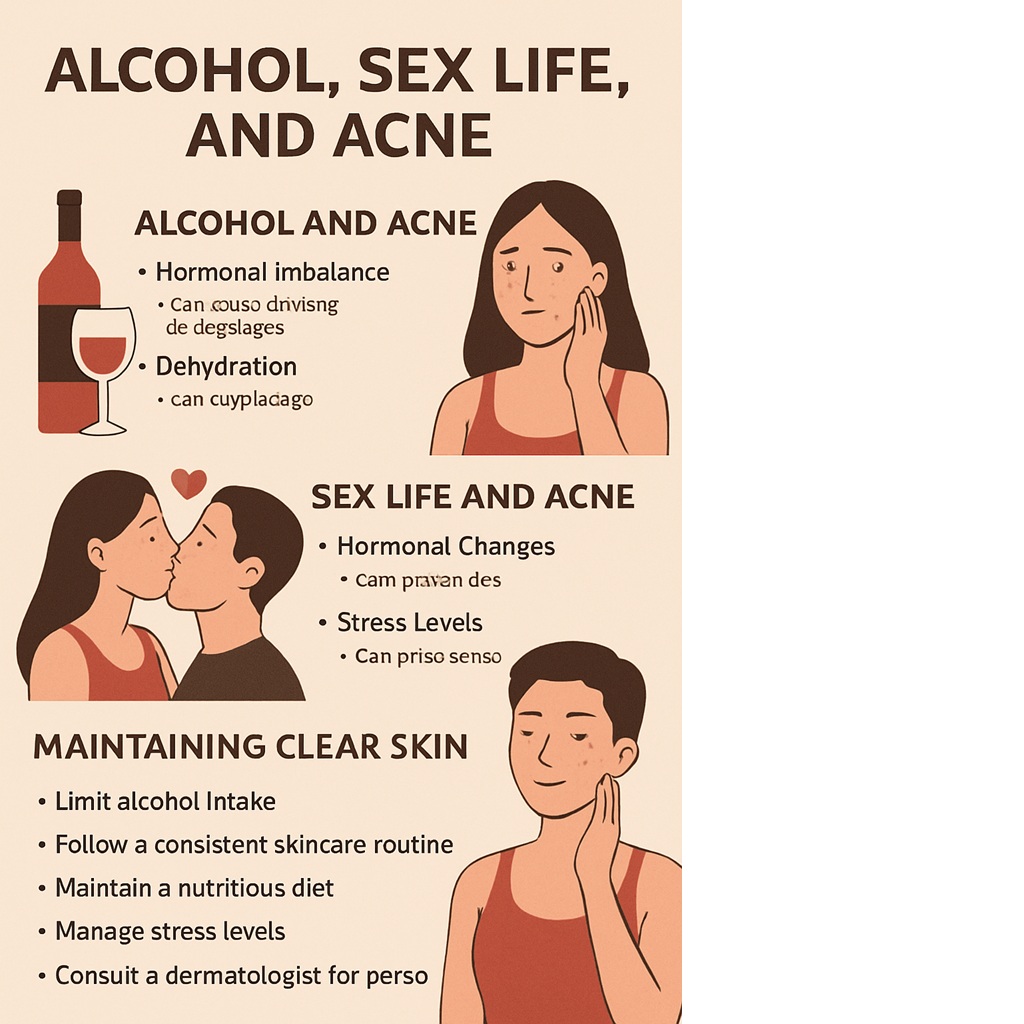
Acne and pimples are common skin concerns that affect people across all age groups. While genetics, hormones, and skincare habits play a major role, lifestyle factors such as alcohol consumption and sexual activity are often surrounded by myths and misconceptions. Many people wonder—Does alcohol cause pimples? Can sex life affect acne? Let us break down the facts.
Alcohol and Acne
Alcohol does not directly cause acne, but it can influence the factors that trigger breakouts:
- Hormonal Imbalance: Excessive drinking may affect hormones like cortisol and testosterone, which can stimulate oil (sebum) production, leading to clogged pores.
- Dehydration: Alcohol dehydrates the skin, reducing its natural glow and making acne more noticeable.
- Inflammation: It increases body-wide inflammation, worsening existing pimples and redness.
- Sleep Disruption: Alcohol affects sleep quality, and poor rest can aggravate acne flare-ups.
Thus, while alcohol may not be the root cause, regular heavy drinking can worsen acne and delay healing.
Sex Life and Acne
A common myth is that sexual activity or masturbation directly causes pimples. Scientifically, this is not true. However, certain indirect connections exist:
- Hormonal Changes: During puberty or adulthood, testosterone fluctuations affect oil production, leading to acne. This hormonal link is often wrongly attributed to sexual activity.
- Stress Levels: A healthy sex life may reduce stress, which can help improve skin. On the other hand, stress from relationship issues or sexual anxiety might worsen acne.
- Lifestyle Habits: Lack of hygiene, irregular sleep, or poor diet related to lifestyle choices may play a bigger role than sex itself.
In short—sex does not cause acne. It is the hormonal and lifestyle factors around it that may have an influence.
Maintaining Clear Skin
If you struggle with acne and pimples, adopting a balanced lifestyle makes a significant difference:
- Limit alcohol intake to avoid dehydration and inflammation.
- Follow a consistent skincare routine with gentle cleansing.
- Maintain a nutritious diet rich in antioxidants and vitamins.
- Sleep well and manage stress levels.
- Consult a dermatologist for personalized treatment like topical creams, oral medication, or advanced options such as chemical peels and laser therapy.
✅ Key Takeaway:
Alcohol and sex life do not directly cause acne, but they can influence the body’s hormonal balance, stress, and lifestyle factors that contribute to pimples. Clear skin is best maintained through healthy habits and professional dermatological care.
Struggling with persistent acne? Learn more about our acne treatment at Derma Solutions, Kothrud, Pune.
Written by Dr. Amey Kelkar, MD Dermatology, Pune