
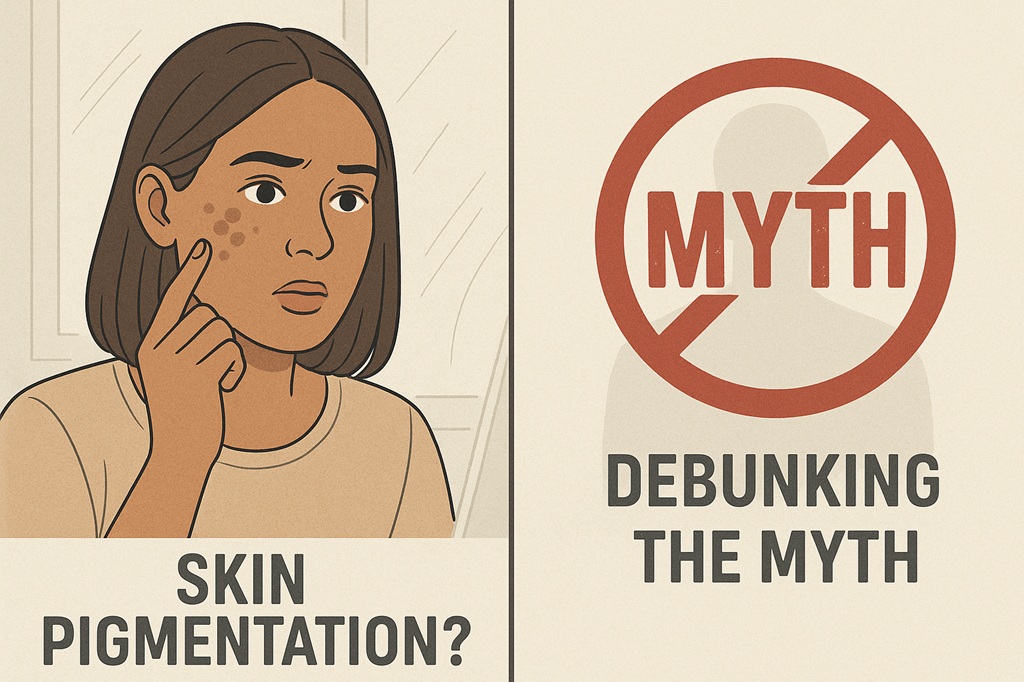
Skin pigmentation—whether in the form of dark spots, melasma, or uneven skin tone—is a common concern. But sadly, many people still believe that irregular sexual activity, suppressed desires, or excessive masturbation can lead to pigmentation issues. This belief, although widespread in conservative circles, is entirely unfounded in medical science.
Let’s examine this misconception and understand the real reasons behind skin pigmentation.
What Is Skin Pigmentation?
Pigmentation occurs when there is an overproduction of melanin—the pigment responsible for skin color. This excess melanin often results in:
- Dark patches or spots
- Melasma (brown patches on the face)
- Post-inflammatory hyperpigmentation (PIH)
- Tanning or uneven skin tone
These changes may appear due to sun exposure, hormonal changes, or skin inflammation—but not because of any sexual activity.
Where the Myth Originates
The misconception likely arises from old cultural beliefs that treat sexuality as something shameful or taboo. In some societies, skin changes are seen as a physical “manifestation” of inner guilt or unfulfilled desires. Pigmentation, particularly on the face, has been wrongly interpreted as a sign of “impure thoughts” or overindulgence.
Such ideas, however, are purely social constructs—not scientific facts.
Proven Causes of Pigmentation
Modern dermatology has identified multiple medically proven causes for pigmentation, including:
- Sun Exposure – UV radiation stimulates melanin production.
- Hormonal Fluctuations – Common during pregnancy, menopause, or due to oral contraceptives.
- Post-Inflammatory Pigmentation – Occurs after acne, injury, or rash.
- Genetics – Some individuals are more prone due to hereditary factors.
- Cosmetics and Skin Products – Some products may irritate skin and cause discoloration.
None of these have any direct or indirect link with masturbation or sexual behavior.
Does Sex Affect Skin Tone?
Normal sexual activity or masturbation does not influence melanin production. While hormonal surges during sexual arousal are real, they are temporary and minor, and have no bearing on pigmentation. Likewise, abstaining from sex or masturbation has no effect on skin tone.
The Harm in Believing This Myth
Myths like these can cause emotional distress, guilt, or unnecessary embarrassment—especially in young people. They may also lead to the avoidance of proper treatment, as individuals feel ashamed or try to hide their symptoms instead of consulting a dermatologist.
It’s important to remember that pigmentation is a medical condition, not a reflection of one’s moral or sexual behavior.
How to Manage Pigmentation Properly
- Use sunscreen daily with at least SPF 30.
- Seek professional treatment such as chemical peels, lasers, or topical creams.
- Avoid picking at pimples or rashes that could leave marks.
- Use dermatologist-approved skin care products suited to your skin type.
Conclusion
There is absolutely no connection between sex, masturbation, and pigmentation. Believing otherwise not only fuels stigma but also prevents people from taking real steps to improve their skin. If you’re dealing with pigmentation, consult a dermatologist—not unfounded myths.


