Acne Scar Treatment with laser treatment uses advanced laser technology to target scar tissue, stimulate collagen production, and promote skin regeneration. This reduces scars, smoothens the skin, and improves overall texture for a clearer, more youthful complexion. Book today!
Laser Acne Scar RemovalTreatment is one of the most advanced and effective methods for treating acne scars. Using targeted laser technology, this treatment works by breaking down the scar tissue and stimulating the growth of new, healthy skin. By promoting collagen production and improving skin texture, laser therapy can dramatically improve the appearance of acne scars, resulting in smoother, clearer skin. At Derma Solution, we utilize specialized fractional CO2 lasers to diminish the appearance of scars, restore skin texture, and help you regain confidence in your skin.
In this article, we will explore the different types of acne scars, the symptoms they present, who is at risk, the underlying causes of acne scars, and how laser treatments can effectively help you achieve scar-free skin. You can also read our acne scar treatment FAQs covering sessions, downtime and expected results.
Types of Acne Scars
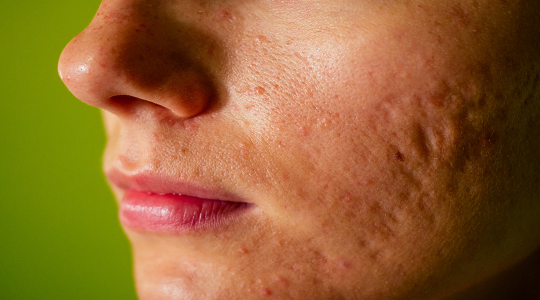
Acne scars are classified into four main types based on their appearance, depth, and the level of skin damage they cause. These types help in determining the most effective treatments for each condition:
Atrophic Scars
Characterized by a loss of tissue, resulting in depressions or indentations in the skin.
Ice Pick Scars: Deep, narrow scars that resemble an ice pick.
Boxcar Scars: Wide, angular scars with sharp edges.
Rolling Scars: Wavy, uneven texture due to deeper skin damage.
Q-Switched Nd:YAG vs Fractional CO2 for acne scars
Q-Switched Nd:YAG
Fractional CO2
How it works
Targets melanin pigment in the skin
Creates controlled micro-injuries that rebuild collagen
Best suited for
Dark marks and post-acne pigmentation
Textural scars – ice-pick, boxcar and rolling
Sessions typically needed
Decided after skin assessment
3 to 6 sessions, 4 to 6 weeks apart
Downtime
Minimal
About 4 to 5 days
References: Indian Journal of Dermatology, Venereology and Leprology – guidelines on lasers for acne scars; Journal of Cutaneous and Aesthetic Surgery – fractional CO2 laser resurfacing.